European Roulette Review: Odds, Bets & Why It Beats American Roulette
European roulette has a single zero. We explain every bet type, the probabilities and the house edge.
European roulette at a glance
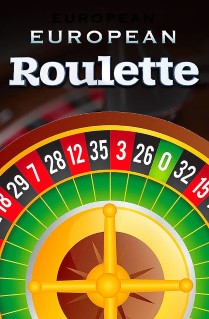
European roulette is the standard single-zero version of roulette. The wheel has 37 pockets — numbers 1 to 36 plus a single green zero — which gives the house a 2.7% edge on standard bets. That is almost half the 5.26% edge on standard American roulette bets, which adds a second zero. At Moolzy, European roulette is available as a digital game and at live dealer tables.
Why European roulette?
The single zero accounts for the house edge. Standard payouts are calculated as if there were 36 numbers, but there are 37 pockets. Adding a double zero, as American roulette does, nearly doubles the house edge without changing standard payouts. As a mathematical illustration, betting ₦1,000 per spin for 100 spins gives a theoretical expected loss of roughly ₦2,700 on a European wheel against ₦5,260 on an American one. These are statistical expectations, not predictions of individual results, which vary.
Every bet explained
Inside bets cover single numbers or small groups: a straight-up number pays 35:1, a split (two numbers) pays 17:1, a street (three) pays 11:1, a corner (four) pays 8:1 and a six-line pays 5:1. Outside bets cover large groups: red or black, odd or even, and high or low all pay 1:1, while dozens and columns pay 2:1. The house edge is the same 2.7% on standard European roulette bets, so no combination removes that edge.
Inside vs outside bets in practice
Inside bets on straight numbers pay 35:1 and have a 1 in 37 probability of winning on each spin. Outside bets like red/black or odd/even pay 1:1 and cover 18 of the 37 pockets. These probabilities do not imply any regular pattern of wins. Both types have a 2.7% house edge under standard European roulette rules.
La Partage and French roulette
Some tables add the La Partage rule: when the ball lands on zero, you get half of every even-money bet back instead of losing it all. That cuts the house edge on red/black, odd/even and high/low bets to 1.35%. Tables with this rule are usually labelled French roulette. The rule does not apply to other bet types.
Betting systems: the honest truth
Martingale, Fibonacci, D'Alembert — roulette systems organise bets but do not beat the wheel. The zero gives standard bets a negative expected return, and no staking pattern changes that. Systems involving escalating stakes can lead to substantial losses or reach table limits. No betting system creates an edge.
Roulette vs other table games
Standard European roulette has a 2.7% house edge. Blackjack can have a house edge around 0.5%, depending on the rules and player decisions, while many slots have theoretical house edges of 4–8%, depending on the game and RTP setting. These figures describe long-term theoretical returns, not individual results. Roulette offers a range of bets on numbered pockets. Crazy Time is a different live wheel-based game with its own rules and prize structure.
Playing on mobile
European roulette is available on mobile. Digital versions use an on-screen betting grid, while live tables include a video stream. Performance and data use depend on the device, connection and game; digital versions without live video generally use less data than live tables.
Responsible-gambling tips
Set a budget or deposit limit and gamble only what you can afford to lose. Take breaks. 'Hot' and 'cold' number boards do not predict outcomes — every spin is independent. Check the table rules, including the number of zero pockets and whether La Partage applies.
Our verdict
European roulette has a single-zero wheel, a 2.7% house edge on standard bets and payouts ranging from 1:1 on even-money bets to 35:1 on straight numbers. La Partage reduces the house edge on even-money bets to 1.35% where that rule applies. Outcomes are random, and no betting system removes the house edge.
Pros
- 2.7% house edge on standard bets — almost half of American roulette's 5.26%
- Fixed rules and published payouts
- A range of inside and outside bets
- La Partage tables cut the edge on even-money bets to 1.35%
- Available as digital games and live tables
Cons
- Random outcomes — no skill can create an edge
- Betting systems like Martingale do not remove the house edge
- American tables have similar layouts but a higher house edge on standard bets
European Roulette FAQ
How do roulette house edges compare?
French roulette with the La Partage rule has a 1.35% house edge on even-money bets. Standard European roulette bets have a 2.7% house edge, compared with 5.26% on standard American roulette bets. Rules and exceptions vary by table.
What is the difference between European and American roulette?
European roulette has one zero pocket; American roulette has two. Standard payouts are the same, so the extra zero nearly doubles the house edge from 2.7% to 5.26%.
How do roulette bets differ?
Bets differ in the number of pockets covered and their payouts. On a European wheel, an even-money outside bet covers 18 of 37 pockets and pays 1:1; a straight-number bet covers one pocket and pays 35:1. Both have a 2.7% house edge under standard rules. La Partage reduces the edge on even-money bets to 1.35%.
Does the Martingale system work?
No. Martingale does not change the house edge or guarantee a profit. Its escalating stakes can result in substantial losses or reach the table limit.
Can I play European roulette for free?
Yes — Moolzy offers free demo versions of digital roulette to learn the rules and mechanics. Demo results do not indicate how often wins occur in real-money play.